
Comparisons & Fees
OKX Fees Explained 2026: Spot, Futures and Withdrawals
What OKX actually charges, broken down by operation: spot maker and taker, futures plus funding, Convert, P2P and both crypto and fiat withdrawals — and where the real money goes.
If you are comparing exchanges or already trade on OKX, the practical question is always the same: what does OKX actually charge, and for what? This guide separates each fee type, because mixing a 0.08% spot fee with a several-dollar ERC20 withdrawal is exactly how people end up miscalculating their real cost.
Where OKX charges, at a glance
| Item | Structure | Order of magnitude |
|---|---|---|
| Spot | percentage of trade value | 0.08% maker / 0.10% taker at base tier |
| Perpetual futures | percentage, maker below taker | hundredths of a percent |
| Futures funding | paid between traders every 8h | variable, can go for or against you |
| Convert | no explicit fee | cost sits in the spread |
| P2P | no fee for the buyer | cost sits in the ad spread |
| On-chain withdrawal | flat amount per network | cents to several USD |
| Fiat withdrawal | flat, percentage, or both | depends on method and country |
Spot: the number everyone quotes
OKX's base tier is 0.08% maker and 0.10% taker. The distinction matters more than it looks:
- You are a maker when your limit order rests on the book and adds liquidity.
- You are a taker when you execute against an order that was already there — a market order, typically.
Using limit orders instead of market orders cuts your fee by 20% in relative terms for doing nothing else. On top of that sit VIP tiers by volume or OKB holdings, and the 20% referral discount, which applies only when the account is created.
Futures: the fee is not the main cost
In derivatives the per-trade fee is small, but there is a second cost beginners routinely miss: funding. Every 8 hours, traders on one side of the market pay traders on the other to keep the perpetual price anchored to spot. It is not an OKX fee — the exchange does not keep it — but it does leave your account when you are on the paying side.
Hold a leveraged position for several days and accumulated funding can dwarf what you paid in commissions. Before trading futures at all, read how leverage and liquidation actually work in our futures risk guide.
The costs that are not labelled "fee"
Convert. One-tap conversion is convenient and shows no fee, but the quoted price carries a margin. Irrelevant on small amounts; meaningful on large ones, where the spot order book is cheaper.
P2P. Buying via P2P charges the buyer nothing. The cost is the gap between the ad price and the market price, and that spread widens noticeably during low-liquidity hours.
Withdrawals: where the money actually goes
For a typical user in Latin America, withdrawals are usually the largest fee line of the month, not trading. And they come in two very different flavours.
On-chain (crypto) withdrawal. A flat amount set by the network, independent of how much you withdraw. USDT over ERC20 can cost several dollars; TRC20 sits around 1 USDT; Polygon or Solana, cents. Withdrawing 100 USD costs the same as withdrawing 10,000 USD — so batching one large withdrawal instead of many small ones is a real saving. Full comparison in the cheapest network to send USDT.
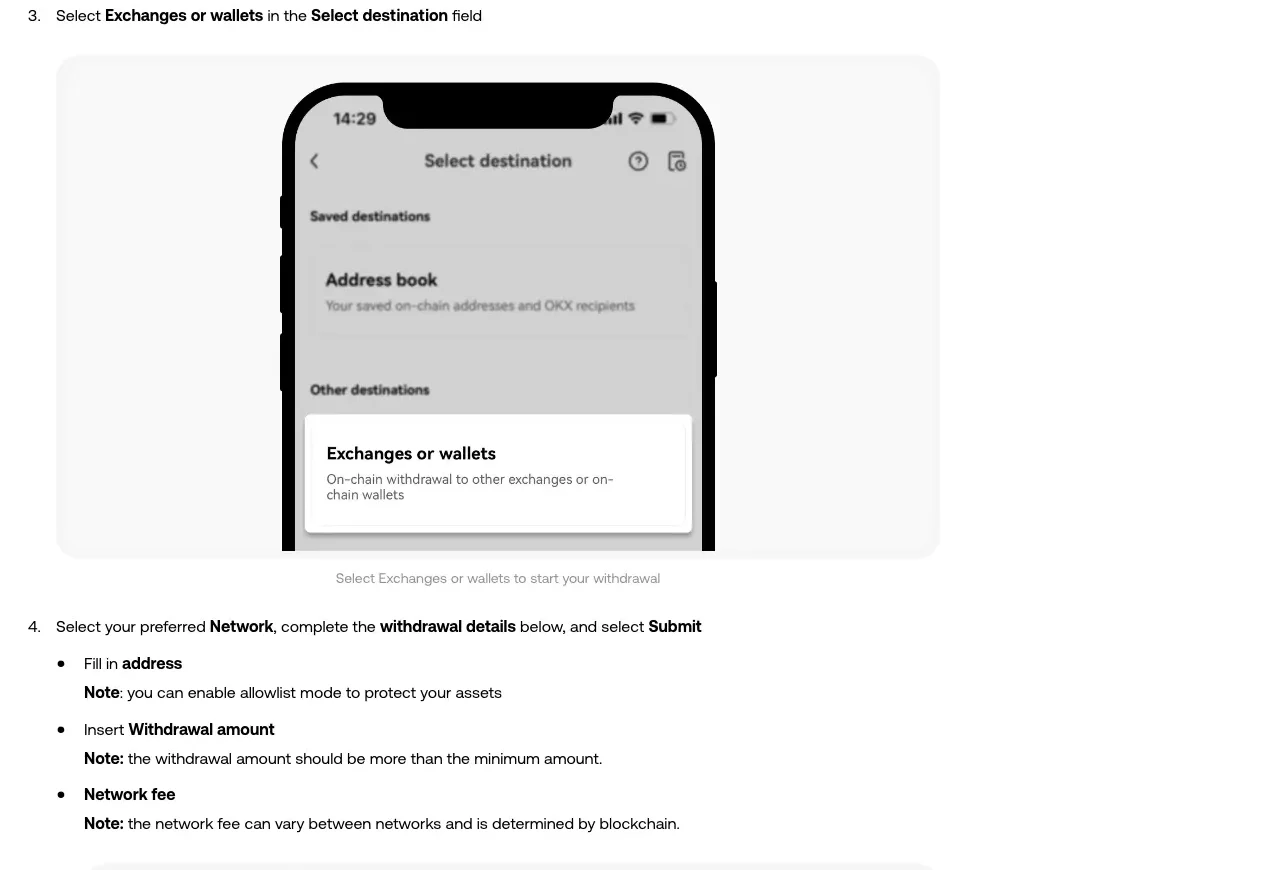
Reference: OKX's crypto-withdrawal help pages. The network sets this fee, not the exchange.
Fiat withdrawal. Here OKX uses three different structures depending on method: a flat fee, a percentage, or a percentage plus a flat fee on top.
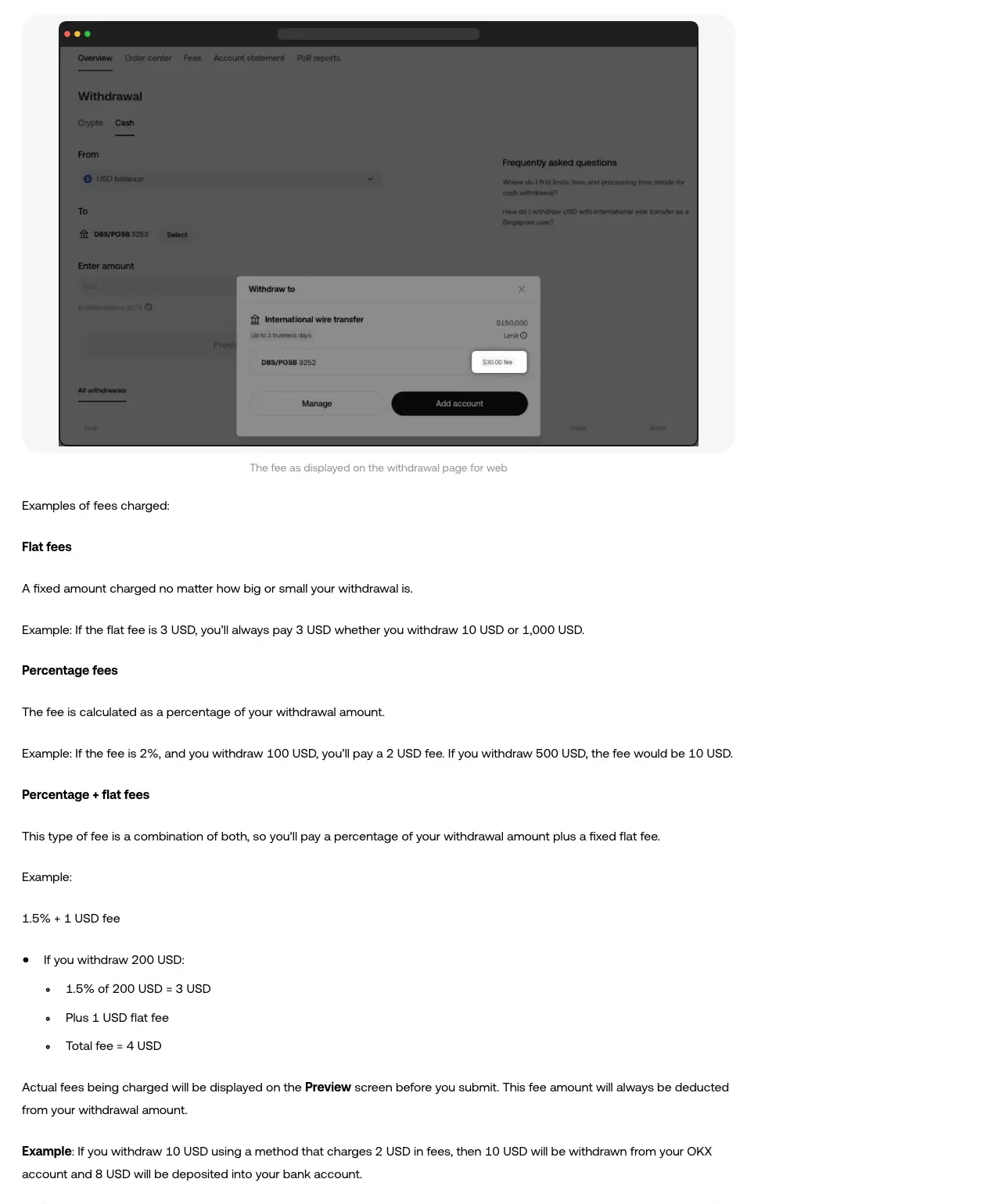
Reference: OKX help centre on cash withdrawal fees.
Alongside the fee there are limits: minimum and maximum per transaction and per period, varying by method and by your verification level.
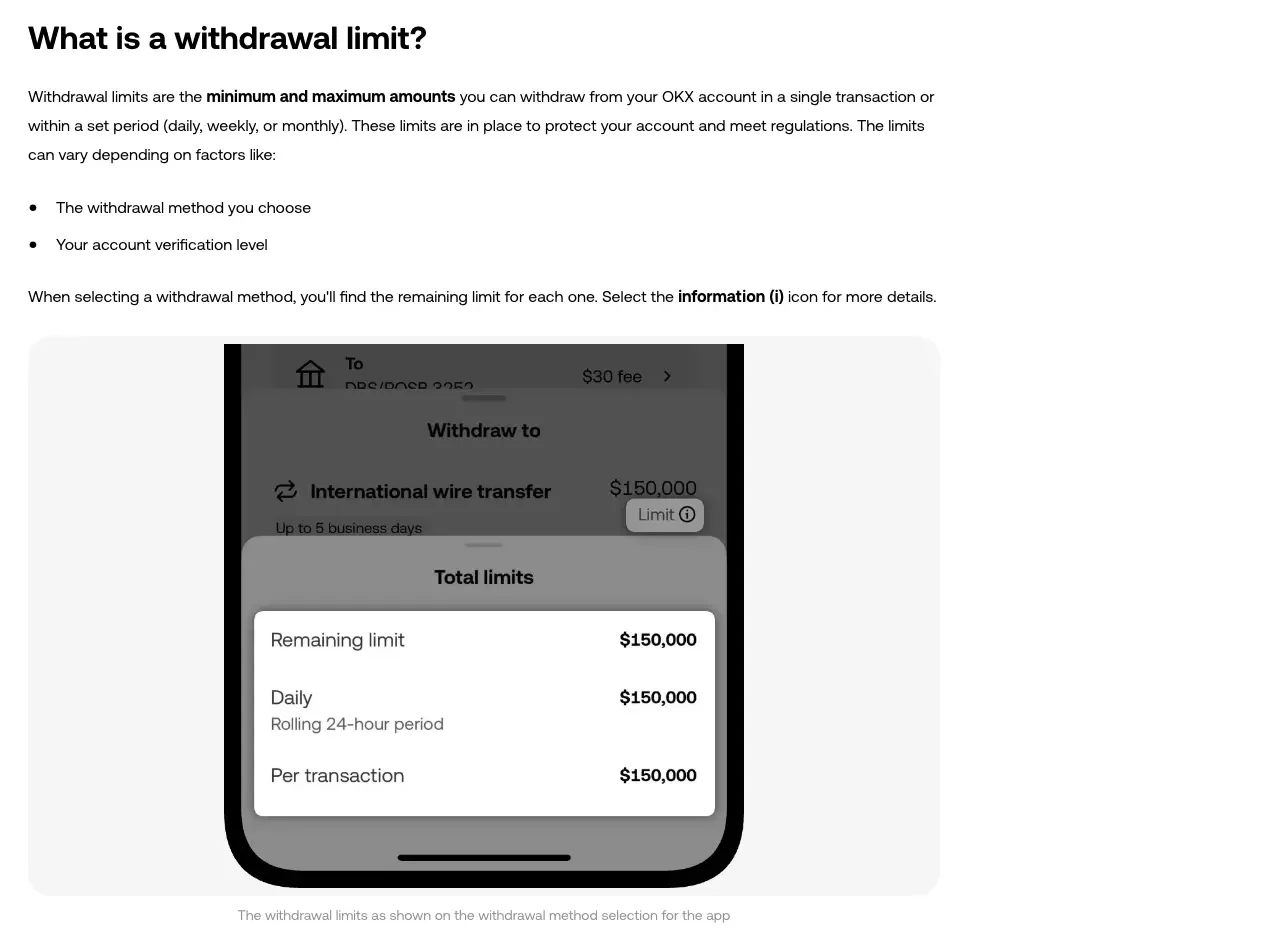
Reference: OKX help centre on withdrawal limits.
How to see what you will pay, in 20 seconds
No table, including this one, replaces the screen. The reliable method never changes: start the withdrawal, pick the method and network, and read the Preview screen before confirming. It shows the exact fee and the net amount you receive. If that number disagrees with an article, the article is stale.
The three decisions that save the most
- Trade as a maker when price is not running away from you: 0.08% instead of 0.10%.
- Pick the right network and batch withdrawals — this is where the large savings are.
- Register with a referral code, which only applies at signup: OKX with code OK6669 gives a 20% trading-fee discount. It cannot be added afterwards.
To compare against Binance before deciding where to trade, see Binance vs OKX in Latin America.
FAQ
Does OKX charge for crypto deposits? On-chain deposits carry no exchange fee; you pay whatever network fee the sender's platform charges.
Does the referral discount cover futures? Programmes typically cover spot and, depending on the current campaign, part of derivatives. The programme page has the exact terms.
Is holding OKB worth it for lower fees? Only at high volume. For an average user, trading as a maker and choosing cheap withdrawal networks beats OKB holdings by a wide margin.
Affiliate disclosure: this article contains referral links. If you sign up for OKX (code OK6669) or Binance (code BNB6669) through our links, you get a 20% discount on trading fees and this site earns an affiliate commission, at no extra cost to you.
Risk warning: cryptocurrencies are volatile, high-risk assets; you may lose your entire capital. This content is educational and informational only and is not financial, legal or tax advice. Do your own research before trading.
Regional notice: this site is written for readers in Latin America (Argentina, Mexico, Colombia, Chile, Peru and others). It is not directed at residents of mainland China, the United States, the United Kingdom or Canada. Always check and comply with the regulations in your country.