
Security & Scams
How Binance P2P Escrow Works (and What It Doesn't Cover)
Escrow locks the seller's USDT while an order is open, but it cannot see your bank account. Understanding exactly where that protection ends is what separates a safe trade from a scam.
When people say Binance P2P "is safe because it has escrow", they are saying something true and incomplete at the same time. Escrow solves one very specific problem and solves none of the others. This guide draws that line precisely, because almost every P2P scam lives on the far side of it.
The problem escrow solves
In a P2P trade, two strangers have to move in some order. Without an intermediary, whoever goes first is exposed: if the buyer pays first, the seller can vanish with the money; if the seller sends the USDT first, the buyer can simply never pay.
Escrow breaks that standoff. The moment an order opens, Binance locks the seller's USDT inside the platform. They are no longer the seller's to spend, and not yet the buyer's either. They stay frozen until the trade settles or is cancelled.
The actual sequence
- You pick an ad and open an order for a given amount.
- Binance automatically locks the seller's USDT. This is escrow.
- The buyer sends local currency outside the platform — bank transfer, SPEI, Nequi, Yape, whatever the ad specifies.
- The buyer marks the order as paid in the app.
- The seller confirms the money landed in their account, and only then releases the USDT.
- Escrow unlocks and the USDT move to the buyer.
Step 5 decides everything, and it is worth dwelling on.
What escrow does not do
Here is the part almost nobody spells out: Binance cannot see your bank account. The platform knows the order is open and the USDT are locked, but it has no idea whether money reached your bank. That leg of the trade happens in a system the exchange has no access to.
Everything escrow does not cover follows from that:
- It does not verify that you were paid. Only you can, by checking your bank.
- It does not reverse a release. Once you tap release, the USDT are gone. There is no undo.
- It does not cover payments made outside the order. If someone talks you into trading over WhatsApp or Telegram, there is no escrow, because there is no order.
- It does not detect a forged receipt. A screenshot is not money.
- It does not protect against bank reversals. A payment can arrive and later be clawed back if the bank rules it fraudulent.
The most repeated scam in the region is simply rushing the seller into releasing before they check. Escrow worked exactly as designed; the seller switched it off voluntarily.
Reading an ad before you trade
Escrow protects you from non-delivery, but choosing the right counterparty saves you the dispute entirely. In the ad list, every merchant shows their track record: completed orders, completion rate and average payment time.
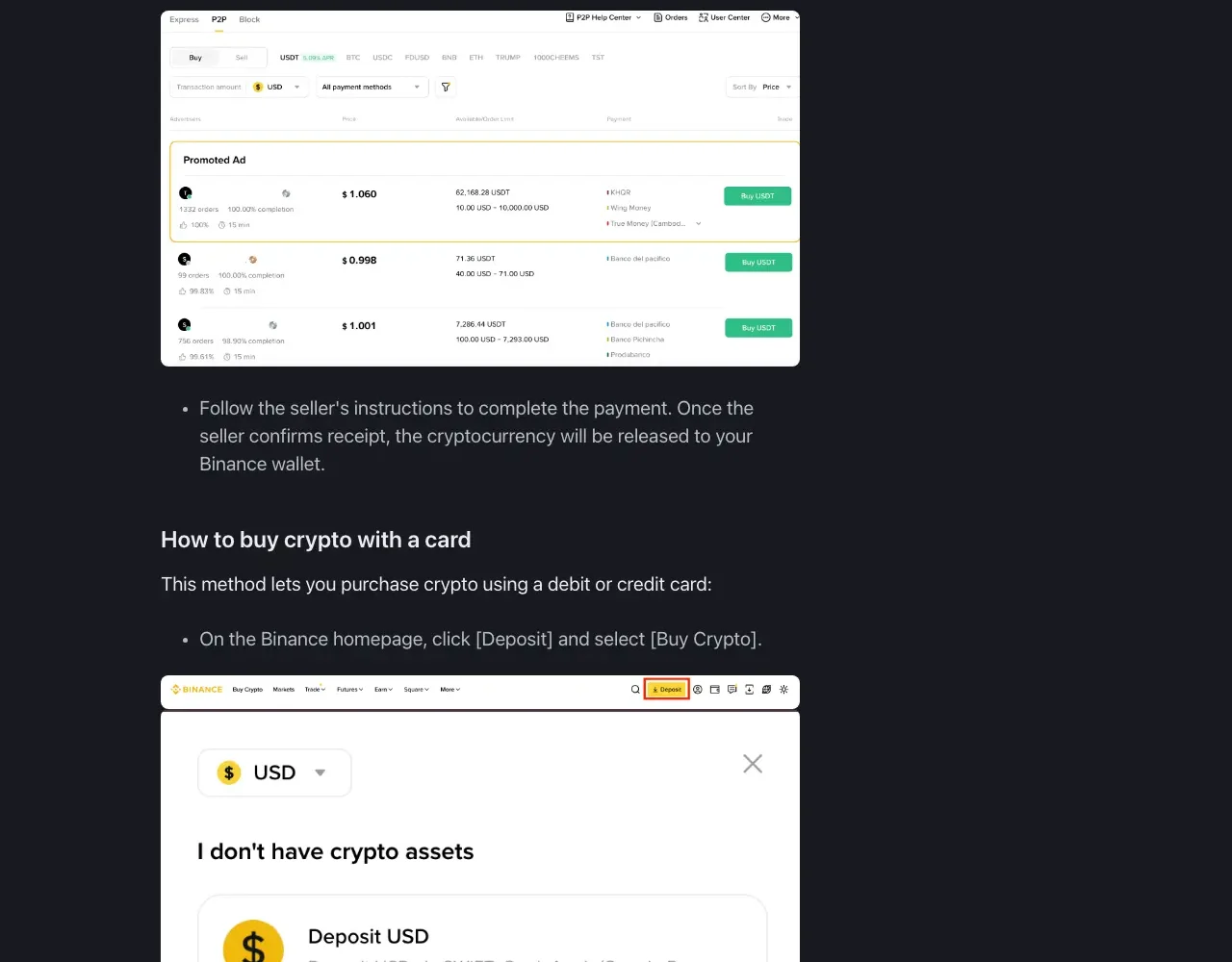
Reference: Binance's official P2P help material. Merchant stats are visible before you open an order.
Practical filters: completion rate at or above 98%, an order count that is not a freshly created account, and verified merchants for large amounts. A price noticeably better than the rest of the market is almost never an opportunity.
What happens in a dispute
If the buyer says they paid and the seller says nothing arrived, either side can open an appeal. While the dispute is open, escrow keeps holding the USDT — nobody walks away with them until it is resolved.
Support asks for evidence and rules on it. That is exactly why everything should happen inside the platform's channels: the order chat is evidence, a WhatsApp thread is not. Keep the official bank receipt with its date and transaction number, not an editable screenshot.
If you suspect organised fraud rather than a one-off — repeating addresses, accounts operating as a network — you can document it in public report databases.
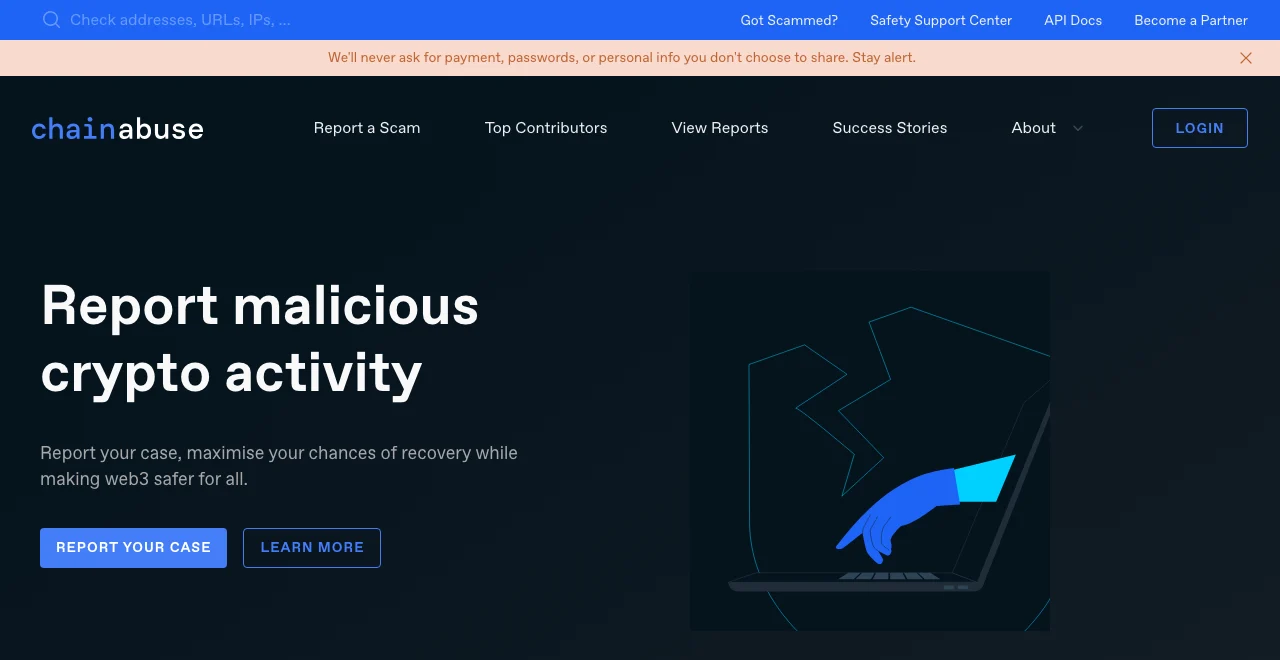
Chainabuse is a public reporting registry. It does not recover funds, but it leaves a trail and helps others recognise the same account.
The one-line rule
If you keep a single sentence from all of this: escrow protects the crypto, not your money. Release only when funds have cleared in your bank, never when someone shows you a receipt.
For the operational detail of each specific scam, continue with how to avoid Binance P2P scams and, if you are the seller, selling USDT via P2P safely. Before trading at all, lock the account down properly: protect your Binance and OKX account.
FAQ
Does escrow cost anything? No. P2P charges the buyer no fee; the real cost is the ad's spread.
How long does the hold last? Until release, cancellation, or resolution of an appeal. Each ad states a payment window; once it expires, the order can be cancelled.
Does OKX work the same way? Yes, the mechanism is identical and the same rules apply. Only the button labels differ.
Affiliate disclosure: this article contains referral links. If you sign up for OKX (code OK6669) or Binance (code BNB6669) through our links, you get a 20% discount on trading fees and this site earns an affiliate commission, at no extra cost to you.
Risk warning: cryptocurrencies are volatile, high-risk assets; you may lose your entire capital. This content is educational and informational only and is not financial, legal or tax advice. Do your own research before trading.
Regional notice: this site is written for readers in Latin America (Argentina, Mexico, Colombia, Chile, Peru and others). It is not directed at residents of mainland China, the United States, the United Kingdom or Canada. Always check and comply with the regulations in your country.