
Not Your Keys, Not Your Coins
Why leaving large amounts of crypto on centralized exchanges is a ticking time bomb.
Updated: April 14, 2026 | Reviewed by the Ubneo editorial team
This guide was refreshed against current fee tables, help-center materials, product flows, and risk checks relevant at publication time. For regional limits, policy changes, or product availability, confirm the latest official documentation before acting. Editorial standards | About Ubneo | Contact
The collapse of FTX in 2022 taught the crypto world a brutal lesson: when you leave your Bitcoin on an exchange, you don't actually own Bitcoin. You own an IOU from a company.
If that company goes bankrupt, gets hacked, or freezes your account, your funds are gone. This is where Hardware Wallets (Cold Storage) come in.
1. Hot Wallets vs. Cold Wallets
- Hot Wallets: Any wallet connected to the internet (e.g., Exchange accounts, MetaMask, Trust Wallet). They are convenient for daily trading but vulnerable to malware, phishing, and hacks.
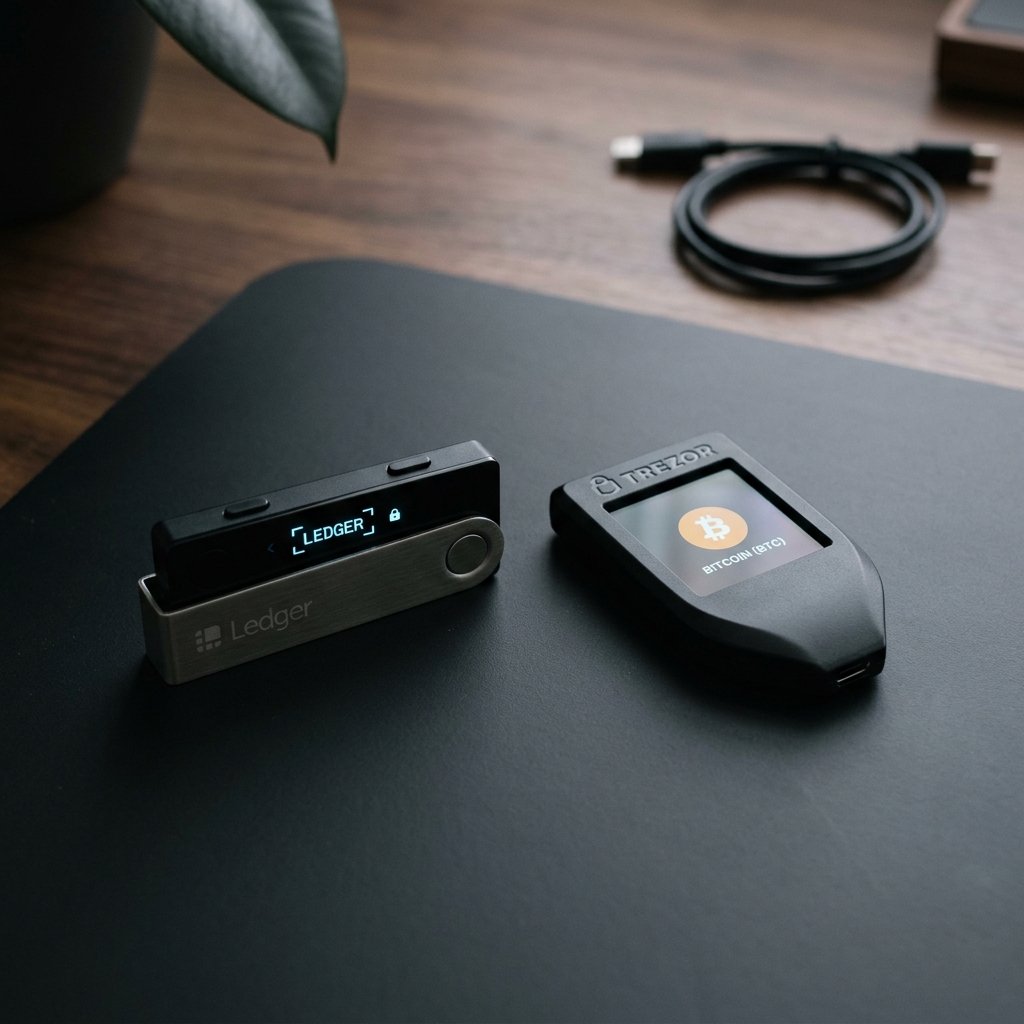
- Cold Wallets (Hardware Wallets): Physical devices (like a USB drive) that store your private keys offline. Your private keys never touch the internet. Even if you plug a hardware wallet into a laptop infected with a virus, the hacker cannot steal your keys because transaction signing happens entirely inside the secure chip of the device.
2. When Should You Buy a Hardware Wallet?
You don't need a hardware wallet if you are just playing around with $100. However, you should absolutely invest in one if:
- Your crypto portfolio exceeds $1,000 (or an amount that would hurt to lose).
- You plan to "HODL" (hold long-term) for months or years without actively trading.
- You want absolute peace of mind knowing nobody can freeze your assets.
3. The Golden Rules of Hardware Wallet Security
⚠️ Rule #1: Never buy from Amazon or eBay
Supply chain attacks are real. Third-party sellers can tamper with the device before shipping it to you. Always buy directly from the official manufacturer's website (e.g., Ledger.com or Trezor.io).
⚠️ Rule #2: Guard your Seed Phrase with your life
When you set up the device, it will generate a 12 or 24-word "Seed Phrase". This is the master backup to your funds. Write it down on physical paper or stamp it into metal. Never take a photo of it, never type it into your phone, and never store it in cloud drives (iCloud/Google Drive). If someone gets your seed phrase, they get your crypto.
Conclusion
Binance is the best place to trade crypto, but a hardware wallet is the best place to store crypto. Buy your assets on the exchange, and withdraw the bulk of your long-term holdings to your cold storage.