
Binance Futures Trading: Leverage, Funding, and Liquidation
Understand isolated margin, cross margin, funding fees, stop losses, and liquidation before opening your first futures trade.
Updated: May 13, 2026 | Reviewed by the Ubneo editorial team
This guide was refreshed against current fee tables, help-center materials, product flows, and risk checks relevant at publication time. For regional limits, policy changes, or product availability, confirm the latest official documentation before acting. Editorial standards | About Ubneo | Contact
Quick answer: what should beginners know first?
Binance Futures is not just spot trading with bigger numbers. Leverage can liquidate your position, funding fees can change the cost of holding a trade, and cross margin can put more of your futures wallet at risk than you intended.
- Start with: isolated margin, low leverage, a preset stop-loss, and a position size you can afford to lose.
- Check before entry: liquidation price, funding countdown, mark price, and whether your region allows futures access.
- Avoid first: cross margin, high leverage, revenge trading, and holding a position through funding without checking the rate.
Trading futures on Binance allows you to profit from both rising (Long) and falling (Short) markets using leverage. However, it is also where 90% of beginners lose their entire portfolio.
This guide skips the basic UI walkthroughs and focuses on the critical risk mechanics you must understand to survive.
1. The Fatal Choice: Isolated vs. Cross Margin
Before you open any position, you must choose your margin mode. Making the wrong choice here is the #1 reason traders get wiped out.
Isolated Margin (The Safe Choice)
In Isolated Margin, the margin assigned to a position is restricted to that specific position. If the market crashes and you get liquidated, you will ONLY lose the funds you allocated to that specific trade. The rest of your futures wallet remains untouched.
Rule of Thumb: Always use Isolated Margin. It acts as a hard stop-loss for your account balance.
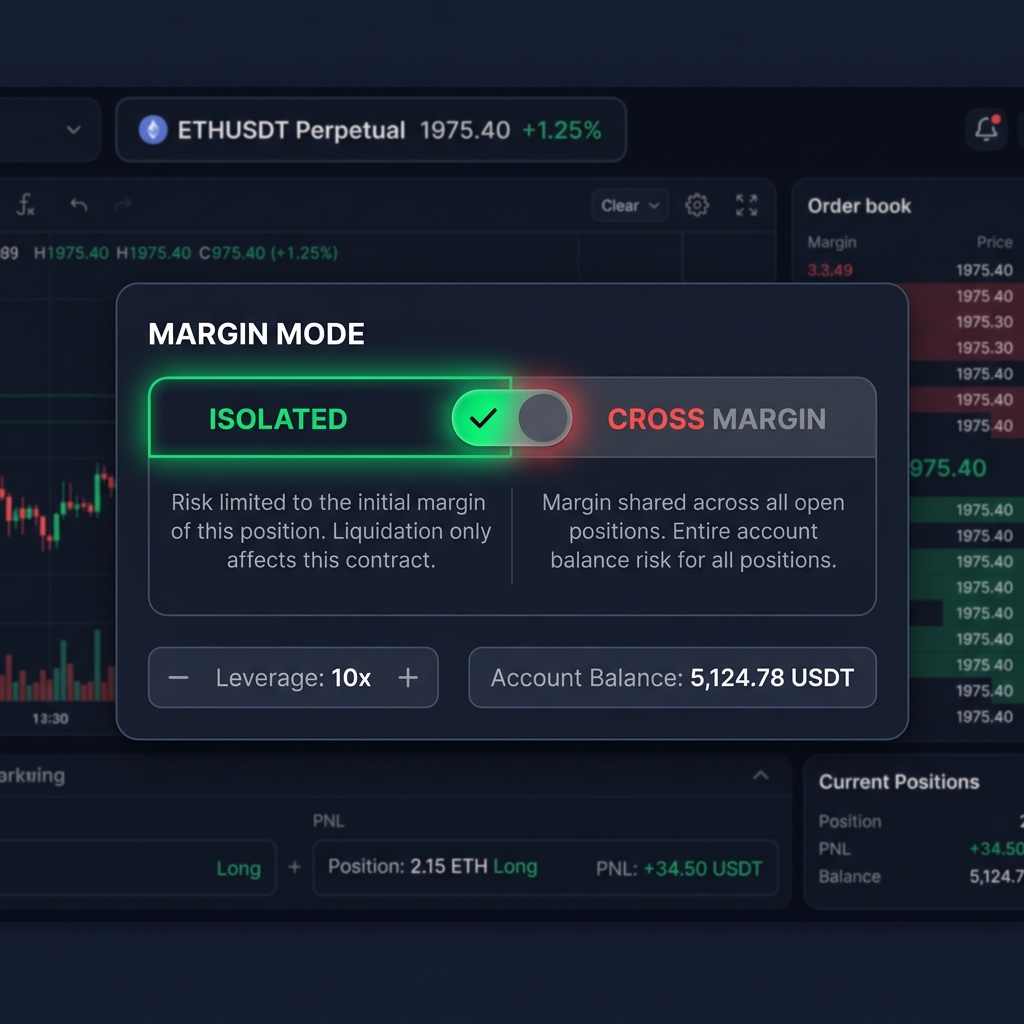
Cross Margin (The Danger Zone)
In Cross Margin, all available funds in your futures wallet are used to prevent liquidation. If a trade goes heavily against you, it will start eating into your available balance to keep the position open. If it drops far enough, your entire futures account balance goes to zero.
2. Understanding Funding Rates
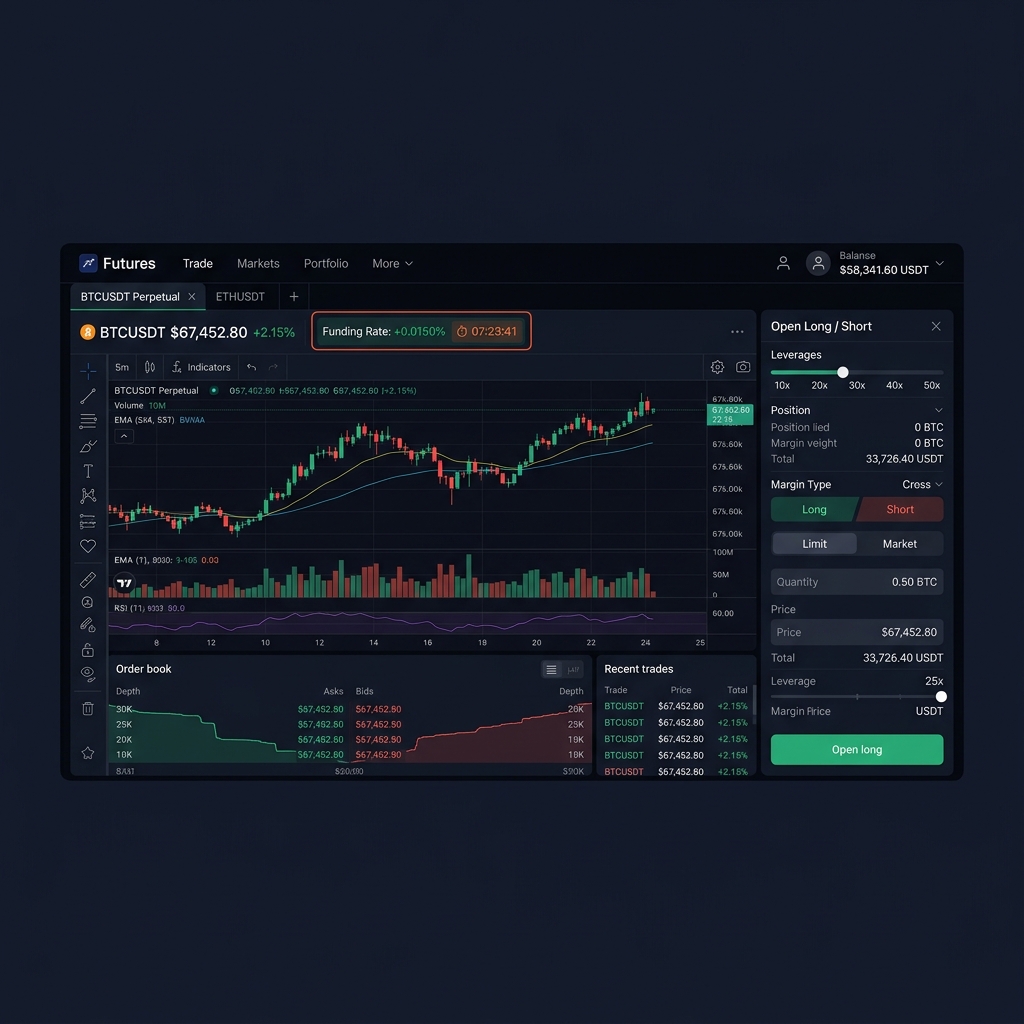
Unlike traditional futures contracts that expire on a specific date, Binance Perpetual Futures never expire. To keep the futures price tethered to the actual Spot price, exchanges use a mechanism called the Funding Rate.
Funding fees are exchanged directly between Long and Short traders every 8 hours.
- Positive Funding Rate (+): The market is bullish. Futures price > Spot price. Longs pay Shorts.
- Negative Funding Rate (-): The market is bearish. Futures price < Spot price. Shorts pay Longs.
📈 Pro Strategy: Cash and Carry Arbitrage
In a raging bull market, funding rates can skyrocket. Institutional traders exploit this by buying $10,000 of Spot BTC and simultaneously Shorting $10,000 of BTC Futures with 1x leverage. They are perfectly hedged against price movements, but they collect the massive funding fee every 8 hours. This is a market-neutral yield strategy.
3. The Liquidation Engine
Liquidation happens when your margin balance falls below the Maintenance Margin requirement. Binance does not use the last traded price for liquidations; they use the Mark Price (an index price based on multiple spot exchanges) to prevent market manipulation and scam wicks.
Golden Rule: Never trade without a Stop-Loss (SL). Set your SL before your liquidation price. Taking a 5% loss is a lesson; getting liquidated is a disaster.